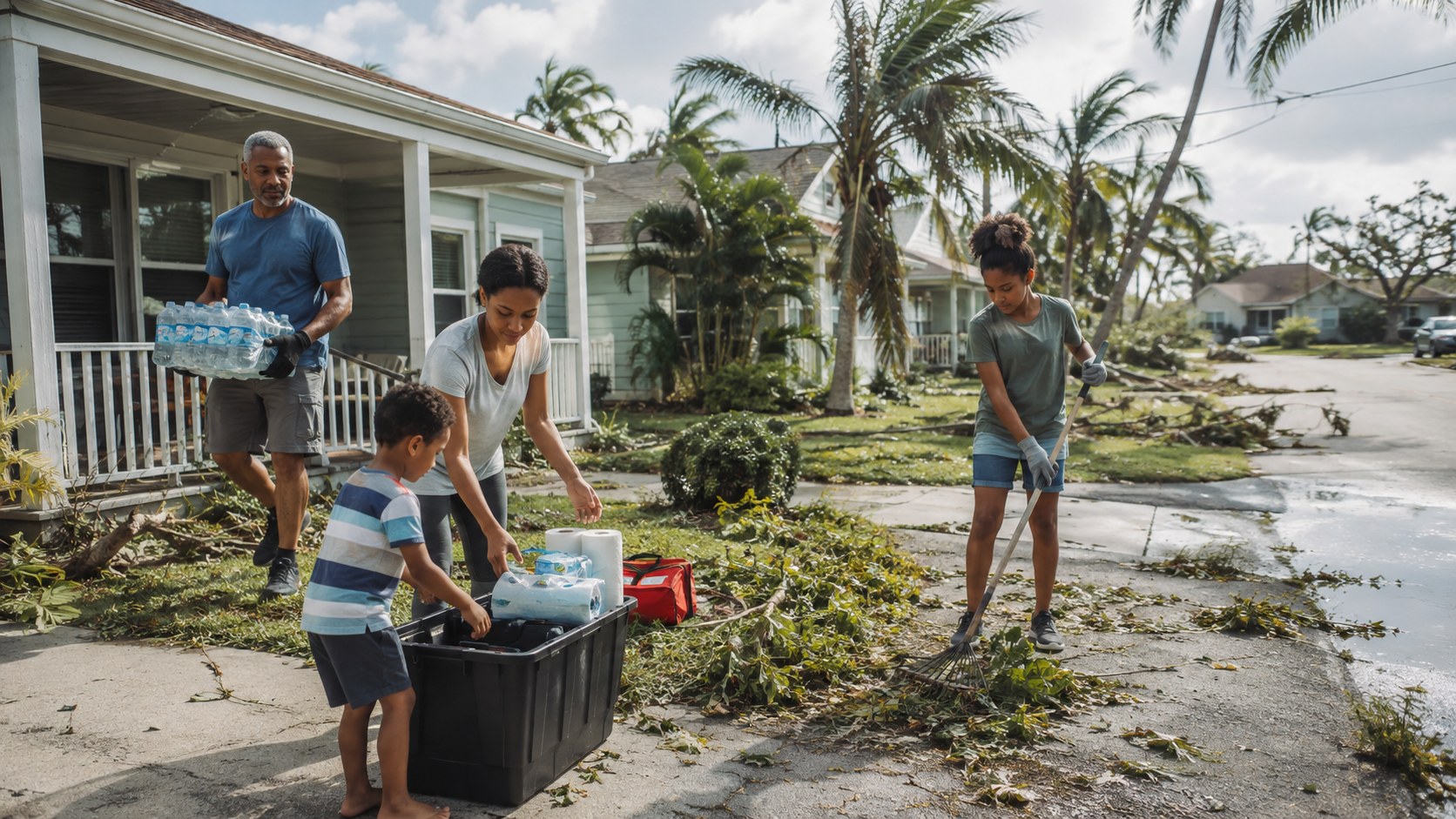
Every Florida business gets the same annual reminder to “prepare for hurricane season,” and most quietly do less than they mean to. Part of the problem is that generic prep checklists are written for households, not businesses — and the two have very different risks.
Before The Season: Documentation
Start with your paperwork, not your plywood. Insurance policies, property records, and employee emergency contacts should exist in a form you can access even if your building doesn't. A cloud backup or an off-site physical copy both work — a single filing cabinet on-site does not.
Before The Season: Your Team's Plan, Not Just The Building's
Building protection (shutters, sandbags, elevated equipment) gets most of the attention, but your team needs its own plan: who makes the call to close, how staff will be notified, and what the expectation is for anyone who can't safely leave once a storm is close. Waiting until a storm is 48 hours out to figure this out costs time you don't have.
72 Hours Out: Communication
Decide now how you'll reach your team when a storm is approaching — text tree, group chat, phone calls — and confirm contact information is current before the season starts, not during it. Cell networks can become unreliable during and after a storm, so identify a backup method and an out-of-area contact point.
72 Hours Out: Operational Decisions
Know in advance what closing looks like operationally: which equipment needs to be shut down or secured, what data or inventory needs protecting, and who's responsible for each. Deciding this in the moment, under time pressure, is how things get missed.
After The Storm: Reopening Safely
Don't assume a cleared storm means a safe building. Downed lines, structural damage, and contaminated water are common after Florida storms. Have a plan for who inspects the site before anyone returns to work, and what the criteria are for reopening.
The Piece Most Businesses Skip
None of this works if it lives only in one person's head. Whatever your hurricane plan looks like, write it down, assign it to specific people, and walk through it with your team before the season — the same principle behind any solid emergency action plan.